Question: Comments on the theory of the social contract?
Answer: That’s a deep and complicated question. I would say, I like social contract theory as part of political theory because it does capture an important aspect of morality-based politics, which is the informed consent of the governed. And certainly, in historical times when we get back to the beginnings of the modern world, the idea of the consent of the governed was just not part of traditional political theory.
Instead, you were a subject. You were expected to obey higher authority. So, I think the emphasis on that historically has been a useful corrective. At the same time, consent is only part of the story because we know people can consent to all kinds of crazy things in subjectivist fashion; and a full theory has to have not only consent, but consenting to things that are in fact, objectively good.
If we all consented to sell ourselves into slavery, those would not be valid contracts. If we all consented to engage in a battle royale where we’re just going to try to kill each other off, that would not be a valid contract. So, it has to be objectively good principles that we understand and consent to. That’s what the full theory has to consist of.
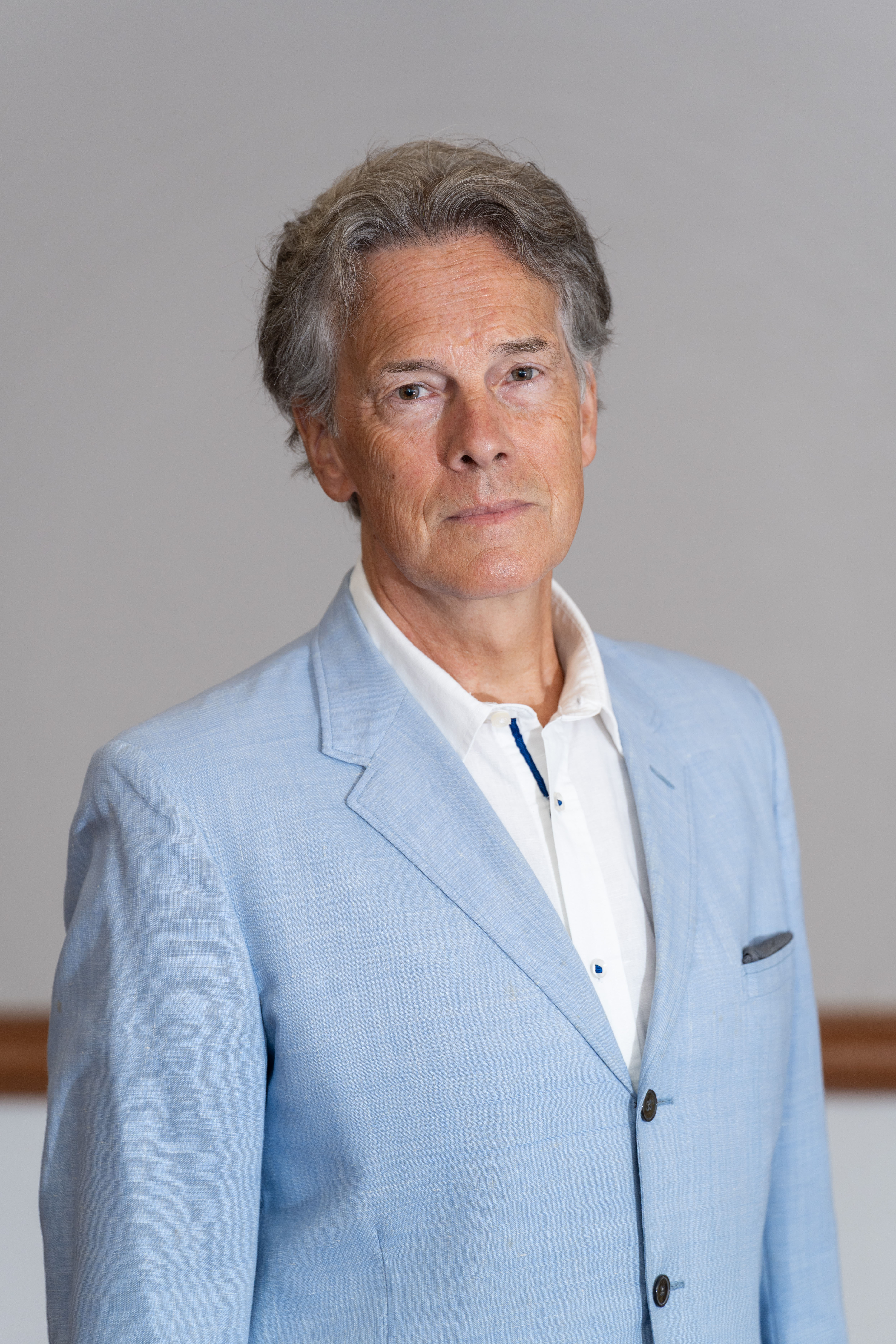
Stephen R. C. Hicks is a Professor of Philosophy and a Senior Scholar for The Atlas Society.
He is author of The Art of Reasoning: Readings for Logical Analysis (W. W. Norton & Co., 1998), Explaining Postmodernism: Skepticism and Socialism from Rousseau to Foucault (Scholargy, 2004), Nietzsche and the Nazis (Ockham’s Razor, 2010), Entrepreneurial Living (CEEF, 2016), Liberalism Pro and Con (Connor Court, 2020), Art: Modern, Postmodern, and Beyond (with Michael Newberry, 2021), Eight Philosophies of Education (2022), and Lectures on the Philosophy of Politics (Spanish translation, Publicaciones del Orden Espontáneo, 2026). He has published in Business Ethics Quarterly, Review of Metaphysics, and The Wall Street Journal. His writings have been translated into 20 languages.
He has been Visiting Professor of Business Ethics at Georgetown University in Washington, D.C., Visiting Fellow at the Social Philosophy & Policy Center in Bowling Green, Ohio, Visiting Professor at the University of Kasimir the Great, Poland, Visiting Fellow at Harris Manchester College of Oxford University, England, and Visiting Professor at Jagiellonian University, Poland.
His B.A. and M.A. degrees are from the University of Guelph, Canada. His Ph.D. in Philosophy is from Indiana University, Bloomington, USA.
In 2010, he won his university’s Excellence in Teaching Award.
