
Arabic


انضم إلى النشرة الإخبارية!
X
 التعليمجامعة أطلس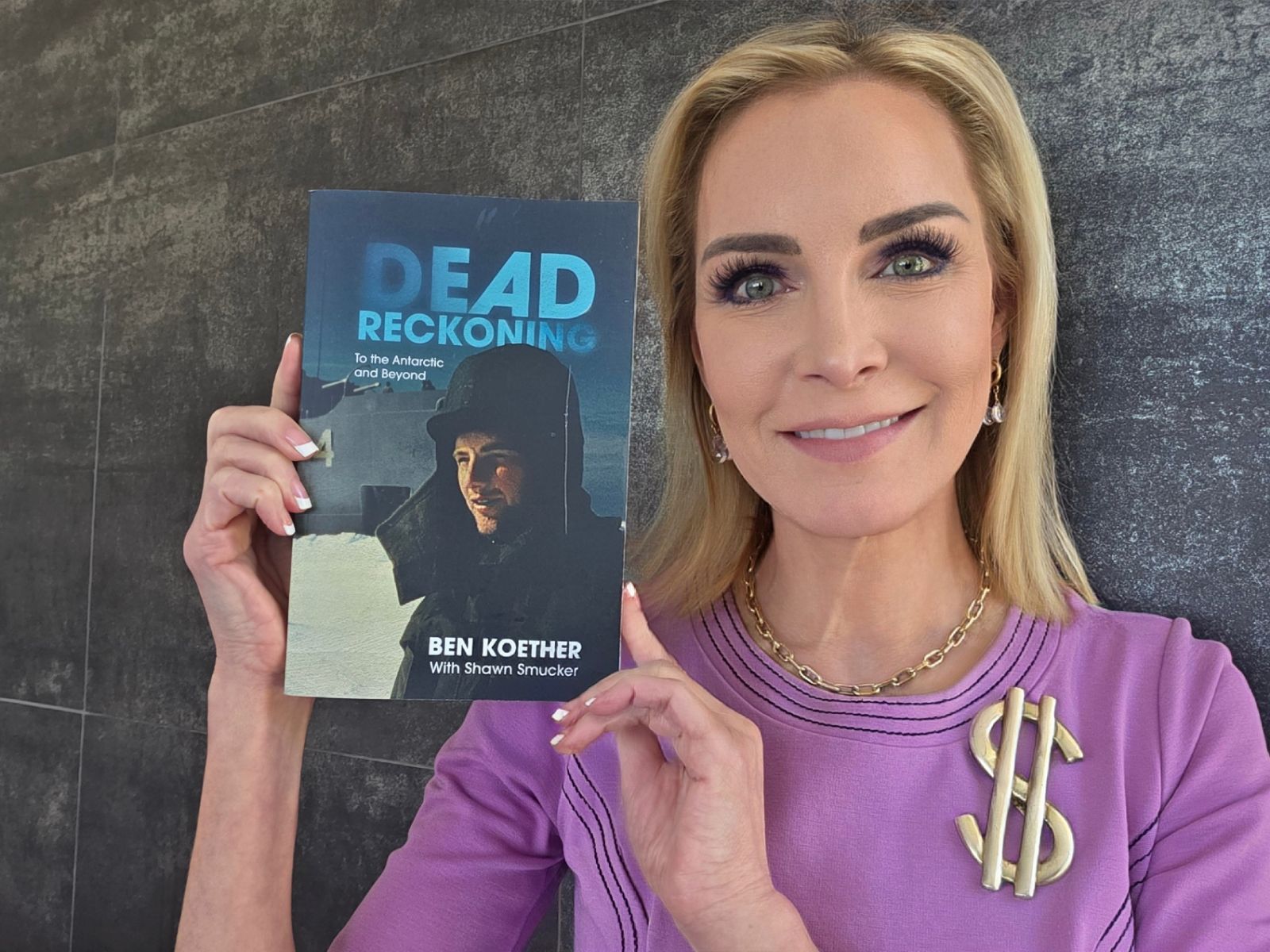
Ben Koether has lived several lives, any one of which would make a compelling memoir.
As a teenager he sailed the Atlantic aboard a 225-foot research schooner, hurling blocks of TNT overboard on command for research scientists. In high school he received a graduate level education from free market lions like Ludwig von Mises and Friedrich Hayek. At twenty-three he became the youngest Naval navigator in the Antarctic, charting coastlines no vessel had ever reached. He helped protect a president-elect the night before his inauguration. He built a company from a garage that ended up in the kitchens of nearly every major fast-food chain on earth.
That all of these lives belong to one man—and the thread of discovery running through them—is what makes Dead Reckoning: To the Antarctic and Beyond so remarkable.
Koether applies this discipline to everything—business, politics, seamanship, life. The memoir is, at bottom, a manual for how to move forward when the fog won't lift.
The book's title is also its thesis. Dead reckoning is the navigator's art of determining position without visible landmarks, using only known speed, direction, and elapsed time. It requires confidence in your instruments, commitment to your calculations, and the willingness to act on incomplete information. Koether applies this discipline to everything—business, politics, seamanship, life. The memoir is, at bottom, a manual for how to move forward when the fog won't lift.
.png)
The adventure strand begins early. Growing up on Long Island Sound, Koether was navigating alone through fog at eight years old, locating a distant buoy by listening for its bell. As a teenager he was struck by lightning during a sailing race—a near-death experience, complete with an out-of-body encounter that left him with a visceral sense of unfinished purpose. At fourteen he snuck aboard the Vema, a famous scientific schooner, talked his way into a berth, and spent a summer working nineteen-hour days under the legendary Captain Lou Kennedy.
The water, for Koether, was never recreation. It was always his school.
Fuel and food running low, the sun going down, 600 men depending on a twenty-three-year-old to find a way out. He did. His reward was a permanent place on the map: Koether Inlet, on the north coast of Thurston Island.
.png)
The Antarctic chapter is the book's dramatic centerpiece. Tasked with charting coastlines never before reached by any vessel in human history—what navigators called the "Phantom Coast"—Koether navigated through sixty-foot waves and crushing sea ice while his ship became trapped 600 miles from open water as winter descended on Antarctica. The stakes were unambiguous: fuel and food running low, the sun going down, 600 men depending on a twenty-three-year-old to find a way out. He did. His reward was a permanent place on the map: Koether Inlet, on the north coast of Thurston Island.
.png)
The entrepreneurial strand runs just as deep. Even as a boy, Koether was placing ads in the paper offering himself as a handyman, joining union crews at fifteen, and earning foreman wages by seventeen. After Brown and an MBA from Columbia, he took a job at AMF—then a Fortune 500 giant—to salvage a division that had spent $100 million in today's dollars with nothing to show for it. AMF was trying to automate restaurant kitchens; the machines worked but the maintenance economics didn't. Koether identified the salvageable asset—an electronic point-of-sale control system—and led AMF to beat IBM and NCR for a National Retail Federation contract, with McDonald's as the test site. Then a single shareholder killed the project at the board level, and Koether's boss rang the next morning to fire him.
Most young executives would have crumpled at such a devastating blow. Not Koether. He somehow managed to get the company to continue paying his salary so he could take a volunteer position on then presidential candidate Richard Nixon’s advance team.
Koether ordered the agent to neutralize the threat—and quietly arranged, without telling anyone, to switch which car Nixon would actually ride in.
The political chapter that follows is among the book's most entertaining. Through his friend Martin Anderson, Koether joined Nixon's 1968 campaign team alongside Arthur Burns, Pat Buchanan, and Ray Price. Nixon won, and Koether managed advance work for the inauguration. The night before the motorcade was to roll, an undercover agent embedded in the SDS and Weather Underground arrived with credible intelligence of a planned attack on the president. Koether ordered the agent to neutralize the threat—and quietly arranged, without telling anyone, to switch which car Nixon would actually ride in. The inauguration proceeded without incident. History recorded nothing, because nothing happened. That was the point.
.png)
What followed the inauguration was the founding of FAST—Food Automation Service Techniques—born from a contract written on a napkin at Bookbinders restaurant in Philadelphia. Koether had zeroed in on a problem that the fast food industry needed fixing: how do you cook a perfect French fry, every time, at scale? The answer was detecting the expansion of the potato itself. Koether secured an SBA loan, raised money from friends, hired engineers, built the first prototype in his garage in ninety days, and went to market.
Within two years he had leased thousands of machines at three dollars a day on five-year non-cancelable contracts. Over fifty years, the company grew to manufacture millions of devices operating in 139 countries, with technology that now connects to the cloud and tells restaurant staff exactly what to cook, when, for how long, and when to discard it. Forty patents. Brutal legal battles. Chinese manufacturers who told him to his face they would copy everything. And through all of it, the same quality that extracted 600 men from Antarctic ice: the willingness to act on available information and keep moving.
The book closes where it began—on the water—with Koether, his wife Joan, and their family caught in a storm of genuine ferocity that tests everything he knows. It is the right ending. The boy who learned to navigate by sound alone, who found his way through the Phantom Coast, who built a company from a garage napkin contract, discovers that all of it—every instrument, every lesson—is still working.
Dead Reckoning is the story of a life organized around a single principle: when the landmarks disappear, you calculate your position from what you know and you move. Ben Koether has been doing exactly that for eight decades. This book is the log of the voyage.
.png)


